after the Civil War and before Lizzy’s westward journey
The War’s Aftermath
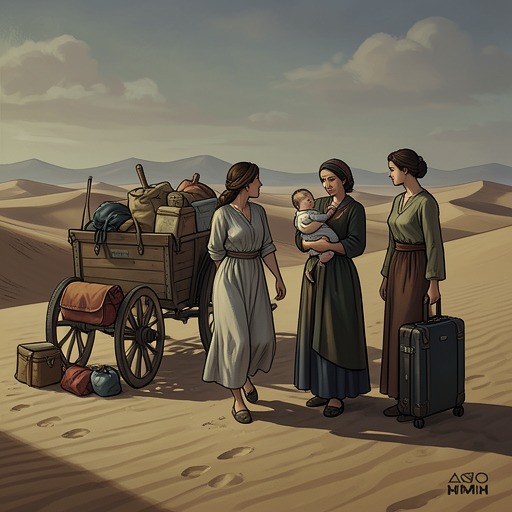
During the Civil War, [Mr. Enders](entity:character-recall-character-mr-enders-bf16447a2420) lost an arm at the [Battle of Buzzard Roost Gap](entity:event-recall-event-battle-of-buzzard-roost-d3081d2bd04e). After the war, the family lost its Georgia plantation under [Sherman's General Order No. 15](entity:event-recall-event-15-1b463af0c072) and moved to [Independence, Missouri](entity:location-recall-location-independence-missour-cb59931b5cf9), where [Mama](entity:character-recall-character-mama-be90aedf6005)’s family gave Mr. Enders work and a home.
Mr. Enders struggled with his dependence on his in-laws and refused to use a gun. When a robber took money from the mercantile, the family’s life in Independence became harder to sustain, and Mr. Enders decided they would go west to seek gold in [Colorado](entity:location-recall-location-colorado-e0fc68fd7477).
before the journey west
The Journey Is Arranged
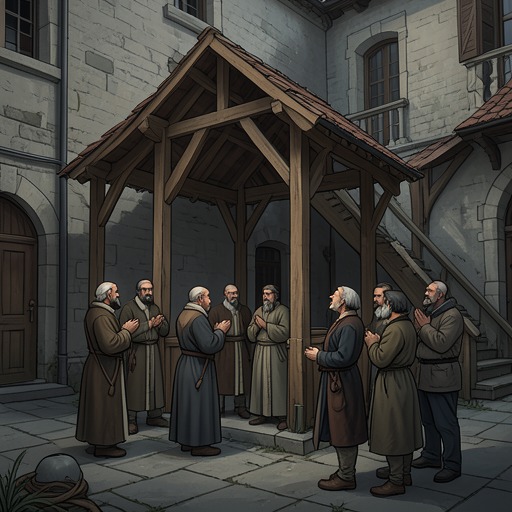
[Mama](entity:character-recall-character-mama-be90aedf6005) wanted to remain in Independence with her family, church, and friends, while [Mr. Enders](entity:character-recall-character-mr-enders-bf16447a2420) was determined to try his fortunes in the West. Lizzy grieved to leave her friend, her cats, and the familiar town; her friend gave her a [Jesse James](entity:character-recall-character-jesse-james-0fc27ad22013) reward poster as a keepsake.
[Jean Baptiste Lamy](entity:character-recall-character-jean-baptiste-lamy-7c7342722283) arranged for the family to bring his grandniece, [Elinora St. Clair](entity:character-recall-character-elinora-st-clair-4a650ca99950), to [Santa Fe](entity:location-recall-location-santa-fe-ef80121842d3) and promised payment for her safe delivery. Mr. Enders chose the longer overland route partly to avoid accepting financial help from Mama’s brothers, and the party set out with supplies for the school.
during the fifty-day journey west
Mama Falls Ill
The caravan crossed the stark, dry country toward [Santa Fe](entity:location-recall-location-santa-fe-ef80121842d3). [Mama](entity:character-recall-character-mama-be90aedf6005), raised amid the softer landscapes of Georgia, grew increasingly ill and spoke of the immense country as an eternity without end.
Her fever worsened as the wagons continued. Lizzy remembered her fear of the land and the strange sights along the trail, but could not understand how serious the illness was until Mama died.
after fifty days on the trail, before reaching Santa Fe
Mama’s Death and Burial
[Mama](entity:character-recall-character-mama-be90aedf6005) died of fever on the trail, far from the family and church she had left behind. The travelers wrapped her in a buffalo robe and held a brief burial ceremony beneath the [Sangre de Cristo Mountains](entity:location-recall-location-sangre-de-cristo-mou-c503b50974b4).
[Mr. Enders](entity:character-recall-character-mr-enders-bf16447a2420) dug the grave with one arm until another traveler took the shovel. Lizzy felt detached from the ceremony and could not find comfort in the prayers or the grave; she wanted her mother brought home, but knew the caravan had to continue.
the evening of Mama’s burial
Anger as a Shield
As her father worked, Lizzy remembered [Uncle William](entity:character-recall-character-uncle-william-ca638fb6f8a6)’s advice to keep anger when tears felt unsafe. She recognized that she still loved [Mr. Enders](entity:character-recall-character-mr-enders-bf16447a2420), even while resenting him for taking the family away from Independence and for the loss of the home she knew.
[Elinora](entity:character-recall-character-elinora-a3af6fd4c698) urged a quicker burial and argued with Lizzy about grief, propriety, and religion. Lizzy hid her own sobs and insisted she did not feel [Mama](entity:character-recall-character-mama-be90aedf6005)’s presence in the grave, beginning to see anger as protection from feelings she could not yet bear.
the first night after the burial
A Promise to Keep Living
Lizzy could not eat supper beside [Mama](entity:character-recall-character-mama-be90aedf6005)’s new grave and wondered whether she wanted to remain alive. Seeing [Mr. Enders](entity:character-recall-character-mr-enders-bf16447a2420) silently bent over the fire, she decided she had to stay alive for him, because he might not care for himself.
She remembered Mama’s life in Independence and asked whether Mr. Enders would write to [Uncle William](entity:character-recall-character-uncle-william-ca638fb6f8a6). That night, [Elinora](entity:character-recall-character-elinora-a3af6fd4c698) warned that a girl could not safely go to [Colorado](entity:location-recall-location-colorado-e0fc68fd7477) with her father, while Lizzy defended him and refused to admit how much she feared losing him too.
the night after Mama’s burial
Elinora’s Warnings
In the wagon, [Elinora](entity:character-recall-character-elinora-a3af6fd4c698) kept talking about the dangers of [Colorado](entity:location-recall-location-colorado-e0fc68fd7477), Catholic schooling, and her influential uncle. Lizzy answered with threats and mockery, unwilling to concede that Elinora’s warnings might touch on a real fear about her future.
The argument eventually gave way to Elinora’s stories of witches, love potions, and [Jean Baptiste Lamy](entity:character-recall-character-jean-baptiste-lamy-7c7342722283)’s supposed exploits against Comanches. Alone in her bed, Lizzy shook with what she called hatred, though grief for [Mama](entity:character-recall-character-mama-be90aedf6005) was also breaking through her anger.
the morning after Mama’s burial
The Cross at the Grave
Lizzy woke to [Mr. Enders](entity:character-recall-character-mr-enders-bf16447a2420) hammering a rough cross into the ground above [Mama](entity:character-recall-character-mama-be90aedf6005)’s grave. She helped cover the grave with stones and asked how soon the party would reach [Santa Fe](entity:location-recall-location-santa-fe-ef80121842d3).
When Lizzy asked whether her father would leave her in Santa Fe and go to [Colorado](entity:location-recall-location-colorado-e0fc68fd7477) alone, he avoided answering and scolded her speech instead. His evasiveness confirmed the fear she had felt since Mama became ill: he planned to leave her behind.
during the last days of the journey
The Arapaho Visitor
As the caravan resumed its journey, Lizzy carved her name and the date into a rock, half willing to be remembered as if she were buried there. The travelers later welcomed an Arapaho man who spoke English and Spanish and shared their food.
Before leaving, he touched Lizzy’s head and said she had an old spirit and would be recognized by the spirits for her good heart. The brief encounter stayed with her as an unsettling suggestion that the country held forms of knowledge she could not explain.
the day before reaching Santa Fe
The False Pond
The travelers stopped to stare at a mirage, and [Elinora](entity:character-recall-character-elinora-a3af6fd4c698) gave a confident explanation of how false ponds appeared in the desert. Lizzy remained eager to reach [Santa Fe](entity:location-recall-location-santa-fe-ef80121842d3) and be free of her companion.
Mrs. French gave Lizzy a new calico dress and bonnet for the convent. The kindness made Lizzy suspect that the adults knew more about her future than they had told her, but she put the dress away without asking.
the evening the caravan reaches Santa Fe
Arrival at Santa Fe
The caravan entered [Santa Fe](entity:location-recall-location-santa-fe-ef80121842d3) at sunset, beneath the glow of the [Sangre de Cristo Mountains](entity:location-recall-location-sangre-de-cristo-mou-c503b50974b4). Lizzy had imagined the town for weeks, but its adobe houses, animals, and crowded streets overwhelmed her rather than matching her expectations.
At the convent, the sisters welcomed [Elinora](entity:character-recall-character-elinora-a3af6fd4c698) and asked where [Mama](entity:character-recall-character-mama-be90aedf6005) was. [Mr. Enders](entity:character-recall-character-mr-enders-bf16447a2420) explained her death, and [Mother Magdalena](entity:character-recall-character-mother-magdalena-0cfe3fe2e80c) comforted Lizzy before the travelers were offered rooms and supper.
the first evening in the convent
A Familiar Face in the Chapel
The convent’s cool rooms, candles, flowers, and plaster saints seemed to Lizzy both strange and familiar. [Elinora](entity:character-recall-character-elinora-a3af6fd4c698) accepted a school uniform, while Lizzy chose the calico dress Mrs. French had given her, insisting she would not stay.
At supper, the atmosphere and music brought [Mama](entity:character-recall-character-mama-be90aedf6005) to mind so vividly that Lizzy called out to her. Exhaustion overtook her, and [Sister Roberta](entity:character-recall-character-sister-roberta-abd28c8ed857) carried her upstairs; waking confused and hearing the caravan outside, Lizzy did not yet realize that her father was leaving without her.
the first night in Santa Fe
Left Behind at Night
Lizzy saw the caravan being hitched in the moonlight and assumed her family had planned an early departure. Her traveling clothes had disappeared, and [Elinora](entity:character-recall-character-elinora-a3af6fd4c698)’s denials could not stop her from realizing the wagons were leaving without her.
[Mother Magdalena](entity:character-recall-character-mother-magdalena-0cfe3fe2e80c) held Lizzy back and told her that [Mr. Enders](entity:character-recall-character-mr-enders-bf16447a2420) had decided she would remain at the convent. Lizzy begged to say goodbye, then screamed as the wagons departed. The secret plan confirmed her worst fear of abandonment and permanently altered her relationship with her father.
the morning after her father leaves
The Search for Ben
After a sleepless night, Lizzy was made to attend Mass among the unfamiliar Catholic rituals and felt trapped by the convent’s rules. Her first pressing worry was whether [Mr. Enders](entity:character-recall-character-mr-enders-bf16447a2420) had taken [Ben](entity:character-recall-character-ben-964df7d0a5ee) with him.
With help from a servant, Lizzy found Ben in the barn and clung to him, grieving for the life she had lost. She saddled him and slipped out of the grounds, intending to follow the trail before realizing she did not know the route her father had taken.
the morning after her escape from the convent
A Ride Toward the Ruins
A servant named [Ramona](entity:character-recall-character-ramona-f5f4f3b591a4) gave Lizzy corn bread and coffee, then urged her toward the hill rather than the trail. Lizzy understood Ramona to be asking her to find someone and rode toward the old fort.
At [Fort Marcy](entity:location-recall-location-fort-marcy-01ecffb70e0a), Lizzy saw exposed bones in the ruined cemetery and looked down over the waking town. The height quieted her distress for a moment, but she still did not know where she belonged or what she would do next.
the morning after Lizzy arrives at the convent
Lizzy Finds Mrs. Lacey
Following the sound of crying, Lizzy found an elderly woman praying beside a grave. The woman introduced herself as [Violate Lacey](entity:character-recall-character-violate-lacey-1ffccaffcb0c) and explained that she visited her son Robert every day, leaving him flowers and a lantern because he had once feared the dark.
Violate refused to return to the convent until Lizzy promised to accompany her to the grave. Her warmth and frankness gave Lizzy an unexpected adult ally, and Lizzy recognized that Violate’s wandering thoughts did not erase her kindness or her grief.
on the return from Lizzy’s first visit to Fort Marcy
Stories Among the Ruins
As Lizzy led Violate down from the cemetery, Violate spoke of her long life, her son’s death, and the people she claimed to know around the old fort. She said that [Jesse James](entity:character-recall-character-jesse-james-0fc27ad22013) sometimes hid there and told Lizzy about [Delvina](entity:character-recall-character-delvina-33e28fb947b7), a woman escaping an abusive husband.
Lizzy considered the tales unlikely but listened closely. Violate’s belief in hidden lives and invisible presences introduced Lizzy to [Santa Fe](entity:location-recall-location-santa-fe-ef80121842d3) as a place where fancy and stark truth could coexist, whether or not she could distinguish them yet.
the day Lizzy returns from Fort Marcy
A Punishment Becomes a Duty
[Mother Magdalena](entity:character-recall-character-mother-magdalena-0cfe3fe2e80c) confronted Lizzy for leaving the convent without permission. Lizzy argued that she had gone to fetch Violate, but Mother Magdalena still reprimanded her and warned that disobedience would have consequences.
Instead of taking away [Ben](entity:character-recall-character-ben-964df7d0a5ee), Mother Magdalena assigned Lizzy to escort Violate to her son’s grave each day and bring her meals. Lizzy concealed her satisfaction: the punishment gave her a reason to leave the grounds and a way to help the old woman.
Lizzy’s first week at the convent
Learning the Convent’s Rules
Lizzy struggled to adapt to the school’s rules about silence, food, humility, chastity, prayer, and obedience. As the only Protestant among the students, she found the rituals and teachings about suffering, purgatory, and Limbo difficult to accept.
The girls’ piety seemed mixed with rivalry and performance, while Lizzy’s grief made religious certainty feel especially remote. She missed the simpler faith she remembered from Independence and began to understand how isolated she was at the school.
during Lizzy’s first week at the convent
Roberta’s Quiet Kindness
[Sister Roberta](entity:character-recall-character-sister-roberta-abd28c8ed857) emerged as a mischievous and compassionate exception to the convent’s rigid atmosphere. She kept plants, smoked a pipe in the infirmary, and quietly gave Violate the coffee that [Mother Magdalena](entity:character-recall-character-mother-magdalena-0cfe3fe2e80c) had forbidden.
When Sister Roberta asked Lizzy to stay until [Delvina](entity:character-recall-character-delvina-33e28fb947b7) gave birth, Lizzy agreed to help keep track of the woman’s condition. Their growing trust gave Lizzy another adult friendship and drew her into the danger that Delvina faced beyond the convent walls.
during Lizzy’s first week at the convent
The Missing Staircase
The sisters’ new chapel had no staircase to its choir loft, an expensive oversight that threatened their hope of using the building as planned. The girls had begun a novena to Saint Joseph, praying for a miracle rather than accepting the prospect of a ladder or costly reconstruction.
Lizzy doubted that prayer alone could solve a practical problem, while [Elinora](entity:character-recall-character-elinora-a3af6fd4c698) resented that there was no choir loft access for her singing. The missing staircase became the convent’s central crisis and a test of faith, patience, and action.
the eighth night of the novena
The Invitation to a Lark
[Elinora](entity:character-recall-character-elinora-a3af6fd4c698) surprised Lizzy by inviting her to sneak out after the evening prayers. Although the other girls used the garden’s grotto to meet boys, Elinora said she wanted advice about her future and did not want to go alone.
[Ramona](entity:character-recall-character-ramona-f5f4f3b591a4) helped the girls leave through the kitchen, believing they were visiting a sick child. Lizzy, curious about Elinora’s secret purpose and tempted by the chance for adventure, went with her into the nighttime streets of [Santa Fe](entity:location-recall-location-santa-fe-ef80121842d3).
the eighth night of the novena, on the way to Dolores’s house
The Beggar Carpenter
On the way to visit Dolores la Penca, Lizzy and [Elinora](entity:character-recall-character-elinora-a3af6fd4c698) met a poor traveler carrying a small sack of carpentry tools and leading a mule. He asked whether anyone in town needed building work.
Lizzy suggested the chapel’s missing staircase, but Elinora dismissed the man as unqualified because of his appearance. The carpenter warned them not to believe everything they heard about magic and said that goodness of heart was the only magic, leaving Lizzy with a strong sense that she had encountered someone familiar.
the eighth night of the novena
Dolores’s Prediction
At Dolores la Penca’s crowded house, [Elinora](entity:character-recall-character-elinora-a3af6fd4c698) asked whether her desire to become a nun was a genuine calling. The witch told her it was, and Elinora left delighted by the answer.
Lizzy felt she had been somehow prevented from hearing the exchange and regretted not asking whether she would hear from her father. Outside, the carpenter had waited for them, and Lizzy invited him to return to the convent for food and shelter.
the night of Elinora and Lizzy’s visit to Dolores
A Prisoner Is Lynched
As the girls returned through [Santa Fe](entity:location-recall-location-santa-fe-ef80121842d3), the carpenter warned them away from a crowd gathered near the Governor’s Palace. They took a side street instead and heard a prisoner cry out in agony.
The next morning, [Jean Baptiste Lamy](entity:character-recall-character-jean-baptiste-lamy-7c7342722283) explained that a mob had dragged a prisoner from jail and hanged him. Violate later identified the man as [Billy the Kid](entity:character-recall-character-billy-the-kid-b39efc56162d), though the Bishop doubted her account, leaving Lizzy unsure how much of Violate’s extraordinary knowledge to trust.
the night the Bishop returns early
Elinora Blames Lizzy
[Jean Baptiste Lamy](entity:character-recall-character-jean-baptiste-lamy-7c7342722283) returned to the convent unexpectedly, and the household searched for Lizzy and [Elinora](entity:character-recall-character-elinora-a3af6fd4c698), who had not come back as expected. Elinora rushed to her uncle and claimed that she had gone out only to protect Lizzy.
[Mother Magdalena](entity:character-recall-character-mother-magdalena-0cfe3fe2e80c) believed the accusation and punished Lizzy with a switching, then confined her to the penance room. [Sister Roberta](entity:character-recall-character-sister-roberta-abd28c8ed857) brought her a pillow, blanket, warm brick, and hot chocolate, assuring her that the Bishop would learn the truth.
the morning after the punishment
The Bishop Hears Lizzy
[Jean Baptiste Lamy](entity:character-recall-character-jean-baptiste-lamy-7c7342722283) summoned Lizzy after Mass and listened to her account of the previous night. He already knew from [Sister Roberta](entity:character-recall-character-sister-roberta-abd28c8ed857) that [Elinora](entity:character-recall-character-elinora-a3af6fd4c698) had lied, and he promised to address his grandniece’s behavior.
The Bishop explained that the town was dangerous after dark and asked Lizzy what might make her life at the convent easier. Lizzy asked him to employ the hungry carpenter on the staircase and to provide [Ramona](entity:character-recall-character-ramona-f5f4f3b591a4) with a new stove; the Bishop agreed and offered Lizzy a kitten.
the day after the carpenter arrives at the convent
A Spiral Solution
Lizzy brought the carpenter to meet [Jean Baptiste Lamy](entity:character-recall-character-jean-baptiste-lamy-7c7342722283). At the chapel, he examined the space and proposed a spiral staircase, a solution the Bishop had not considered.
The carpenter asked to wait until the novena ended before beginning, out of respect for Saint Joseph. Lizzy wondered whether she had told him about the prayers, but the Bishop accepted the delay and arranged for the carpenter to proceed afterward.
the first week at the convent
Lizzy Takes Violate to the Grave
Lizzy’s daily trips with Violate took them through [Santa Fe](entity:location-recall-location-santa-fe-ef80121842d3)’s market and past familiar townspeople who respected the old woman. Violate shared treats and money with children and even greeted a prisoner she called [Billy the Kid](entity:character-recall-character-billy-the-kid-b39efc56162d).
At [Fort Marcy](entity:location-recall-location-fort-marcy-01ecffb70e0a), Violate spoke of ghosts, old gods, and living fugitives, while Lizzy waited for her to leave food for [Delvina](entity:character-recall-character-delvina-33e28fb947b7). The visits brought comfort and companionship, but they also made Lizzy confront her own mother’s lonely grave on the trail.
the end of Lizzy’s first week at school
A Request to Stay
After learning herbs with [Sister Roberta](entity:character-recall-character-sister-roberta-abd28c8ed857), Lizzy told Violate that the carpenter had found a way to build the staircase. Violate believed the work would let Robert rest in peace and confessed her fear that the nuns might baptize her Catholic if her mind failed.
Violate asked Lizzy to undo such a baptism with an asafetida bag, a remedy she claimed came from Dolores. Lizzy promised despite doubting that it could work, and told Violate that Sister Roberta wanted to bring [Delvina](entity:character-recall-character-delvina-33e28fb947b7) to the convent before the baby arrived.
the morning after the eighth night of the novena
Delvina’s Child Is Born
Lizzy and Violate heard a baby crying at [Fort Marcy](entity:location-recall-location-fort-marcy-01ecffb70e0a) and found [Delvina](entity:character-recall-character-delvina-33e28fb947b7) in a ruined building with her newborn daughter. Delvina said [Lozen](entity:character-recall-character-lozen-128cb9299bc6) had stayed with her through the night and helped deliver the child.
Delvina was weak and feared that her abusive husband would find her at the convent. Lizzy urged her to accept [Sister Roberta](entity:character-recall-character-sister-roberta-abd28c8ed857)’s offer of shelter, then rode back to alert the sisters and bring help.
the evening Delvina gives birth
Delvina Is Brought to Safety
Exhausted after riding back to the convent, Lizzy told [Jean Baptiste Lamy](entity:character-recall-character-jean-baptiste-lamy-7c7342722283) that [Delvina](entity:character-recall-character-delvina-33e28fb947b7) and the baby needed help. The Bishop ordered Gregorio to fetch them and sent [Sister Roberta](entity:character-recall-character-sister-roberta-abd28c8ed857) with him, insisting that the convent was a place of asylum.
Lizzy collapsed from exhaustion before the rescue returned. The sisters cared for her, while the Bishop recognized that Delvina should have been brought to safety sooner and protected her child from the danger posed by her husband.
the day after the rescue
Delvina Dies
[Delvina](entity:character-recall-character-delvina-33e28fb947b7)’s condition worsened from blood loss after childbirth, and she died despite the sisters’ care. Her daughter, named [Elena](entity:character-recall-character-elena-b3497658465a), survived and was kept at the convent under the Bishop’s protection.
Violate gave Lizzy a twenty-dollar gold piece that she said [Jesse James](entity:character-recall-character-jesse-james-0fc27ad22013) had given Delvina, and asked her to leave a warning note for him at Robert’s grave. Lizzy also learned that the carpenter had made Delvina’s coffin, while the staircase work had been paused at [Elinora](entity:character-recall-character-elinora-a3af6fd4c698)’s request.
the day Delvina’s funeral is arranged
Her Father’s Letter
[Mother Magdalena](entity:character-recall-character-mother-magdalena-0cfe3fe2e80c) gave Lizzy a letter from [Mr. Enders](entity:character-recall-character-mr-enders-bf16447a2420). He had abandoned his plan to seek gold in [Colorado](entity:location-recall-location-colorado-e0fc68fd7477) after meeting a drover who described work at the [Santa Gertrudis Ranch](entity:location-recall-location-santa-gertrudis-ranc-12e2179e87a3) in [Texas](entity:location-recall-location-texas-f19b16f8e87c).
His letter focused on the money and responsibility he hoped to earn as a ranch foreman, with only a brief assurance that Lizzy could join him after her education. Lizzy felt wounded by the lack of apology or affection, even as she longed for him to ask plainly for her to come.
the evening Delvina’s coffin is made
The Carpenter’s Counsel
Lizzy found the carpenter in the barn and told him about her father’s letter. He explained that work was a burden fathers carried and that some men struggled to name the hurt they had caused their families.
The carpenter urged Lizzy to write to [Mr. Enders](entity:character-recall-character-mr-enders-bf16447a2420) even if she could not forgive him. He also advised her to give [Abeyta](entity:character-recall-character-abeyta-38bb934823ca)’s note to [Mother Magdalena](entity:character-recall-character-mother-magdalena-0cfe3fe2e80c) if she feared it would lead [Elinora](entity:character-recall-character-elinora-a3af6fd4c698) into danger, prompting Lizzy to decide to pass it on.
the night of the Comanche moon
Elinora’s Note Is Delivered
At [Delvina](entity:character-recall-character-delvina-33e28fb947b7)’s funeral service, Lizzy volunteered to care for [Elena](entity:character-recall-character-elena-b3497658465a) while the others went to the cemetery. She gave [Mother Magdalena](entity:character-recall-character-mother-magdalena-0cfe3fe2e80c) the note from [Abeyta](entity:character-recall-character-abeyta-38bb934823ca), explaining that she feared [Elinora](entity:character-recall-character-elinora-a3af6fd4c698) would meet him and asked that her roommate not be punished.
Mother Magdalena took the note and intercepted Elinora before she could leave with the funeral procession. Elinora was confined to the convent, and the Bishop later questioned her claimed vocation and imposed consequences for her deception.
the night of Delvina’s funeral
Lizzy Chooses Cleo
With [Jean Baptiste Lamy](entity:character-recall-character-jean-baptiste-lamy-7c7342722283)’s permission, Lizzy chose a kitten from the Bishop’s cat’s litter and named her [Cleo](entity:character-recall-character-cleo-bbd2520849a1). The kitten’s warmth reminded Lizzy of the cats she had left in Independence and brought her to tears.
Lizzy also grew attached to [Elena](entity:character-recall-character-elena-b3497658465a), imagining her as the little sister she had always wanted. Caring for the baby gave her a new tenderness amid the loss of [Mama](entity:character-recall-character-mama-be90aedf6005) and the uncertainty of her own future.
the morning after Delvina’s funeral
The Schoolgirls Reject the Carpenter
The girls confronted Lizzy for enjoying the guest room and for allowing the carpenter to work. They believed his presence would prevent Saint Joseph from answering their novena and planned to ask [Jean Baptiste Lamy](entity:character-recall-character-jean-baptiste-lamy-7c7342722283) to stop the construction.
[Elinora](entity:character-recall-character-elinora-a3af6fd4c698) joined their campaign, presenting her alleged calling as evidence that she had special insight into the saint’s wishes. Lizzy rejected their argument and continued to support practical work, even as the students began to treat her as a traitor.
the afternoon after Delvina’s funeral
Violate’s Past
While sick in bed, Violate told Lizzy about her first husband’s violence in Richmond and her failure to leave him while her son Robert was young. When Robert tried to protect her, he killed his father during a struggle over a gun.
Violate helped Robert escape and later learned that he had died as a young soldier at Ball’s Bluff. Her guilt over his death drove her donations to the church and her belief that the staircase would help redeem his soul, though Lizzy tried to persuade her that she was not responsible.
the Sunday after Delvina’s death
Ramon Baca Is Identified
A newspaper reported that [Ramon Baca](entity:character-recall-character-ramon-baca-a51c7fb2b3dd) had long been suspected of murdering James L. Collins and stealing a large government sum. The girls learned that he had been [Delvina](entity:character-recall-character-delvina-33e28fb947b7)’s husband and feared he might come to claim [Elena](entity:character-recall-character-elena-b3497658465a).
Lizzy remembered her attack at [Fort Marcy](entity:location-recall-location-fort-marcy-01ecffb70e0a) and wondered whether the person who rescued her had been an officer, [Lozen](entity:character-recall-character-lozen-128cb9299bc6), or [Jesse James](entity:character-recall-character-jesse-james-0fc27ad22013). The news made clear that Elena remained in danger even after Delvina’s death.
the Sunday after Delvina’s death
Cleo Is Injured
As the girls plotted to fast and petition the Bishop, [Cleo](entity:character-recall-character-cleo-bbd2520849a1) chased beads scattered across the parlor floor. [Elinora](entity:character-recall-character-elinora-a3af6fd4c698) seized the kitten and threw her out of a window, threatening further harm.
Lizzy found Cleo frightened and bleeding from both eyes. [Sister Roberta](entity:character-recall-character-sister-roberta-abd28c8ed857) believed the kitten had been poked with a sharp object and warned that she might be blind, leaving Lizzy devastated and furious at the cruelty directed toward an innocent animal.
the Sunday after Cleo is injured
A Promise for Violate
Lizzy brought Violate coffee and heard her describe the violence she had endured and her guilt over Robert’s death. Violate believed the nuns’ Catholic baptism might keep her from reaching her Methodist heaven and again asked Lizzy to reverse it with an asafetida bag.
After Violate explained that Dolores had taught her the supposed remedy, Lizzy promised to honor the request. She did not tell Violate that the Bishop had baptized her while she was unconscious, nor could she be sure the bag would have any effect.
Monday after the Sunday parlor gathering
The Hunger Petition
The boarding girls began refusing meals to pressure [Jean Baptiste Lamy](entity:character-recall-character-jean-baptiste-lamy-7c7342722283) into suspending the carpenter’s work. [Elinora](entity:character-recall-character-elinora-a3af6fd4c698) led the fast and circulated a petition, saying the girls’ faith in Saint Joseph required the carpenter to stop.
Lizzy refused to join them and endured the classmates’ accusations that she had betrayed Elinora by handing over [Abeyta](entity:character-recall-character-abeyta-38bb934823ca)’s note. The Bishop accepted the petition to prevent students from fainting and going hungry, despite his own doubts about the demand.
during Violate’s final illness
The Bishop’s Baptism
As Violate’s health declined and she fell into a coma, [Jean Baptiste Lamy](entity:character-recall-character-jean-baptiste-lamy-7c7342722283) baptized her into the Catholic faith, believing he was ensuring that she would be received into heaven. Lizzy objected that Violate had expressly wished to remain Methodist.
The Bishop told Lizzy that such a decision was too great a burden for a child and urged her to leave Violate’s fate to God. He then asked how [Cleo](entity:character-recall-character-cleo-bbd2520849a1) had been injured, and Lizzy finally identified [Elinora](entity:character-recall-character-elinora-a3af6fd4c698) as responsible.
the morning after Lizzy names Elinora
The Bishop Punishes Elinora
[Jean Baptiste Lamy](entity:character-recall-character-jean-baptiste-lamy-7c7342722283) learned that [Elinora](entity:character-recall-character-elinora-a3af6fd4c698) had harmed [Cleo](entity:character-recall-character-cleo-bbd2520849a1) and arranged for her to be switched, acting against his usual opposition to corporal punishment because the kitten had been hurt. At the same time, he accepted the girls’ petition and ordered the carpenter to pause his work for a week.
[Sister Roberta](entity:character-recall-character-sister-roberta-abd28c8ed857) explained that the Bishop had personally carried out the punishment and that the carpenter would likely leave rather than accept free food and lodging. Lizzy felt that the staircase and the comfort it might bring Violate were slipping away.
after the Bishop accepts the petition
Lizzy Writes to Her Father
[Sister Roberta](entity:character-recall-character-sister-roberta-abd28c8ed857) told Lizzy that [José](entity:character-recall-character-jos-94f8299e2eea) might remain if Lizzy asked him and wrote to [Mr. Enders](entity:character-recall-character-mr-enders-bf16447a2420). Lizzy resisted the suggestion, afraid that reopening contact would expose her to another disappointment, but finally wrote an honest letter asking whether her father truly wanted her.
She showed the letter to the carpenter in the barn. José agreed to stay for a week, while cautioning Lizzy not to promise that she would take [Elena](entity:character-recall-character-elena-b3497658465a) to [Texas](entity:location-recall-location-texas-f19b16f8e87c) merely to persuade him to remain. Lizzy nevertheless began to imagine the baby as a sister and a future responsibility.
the week after the girls’ petition
Saint Joseph Does Not Come
[Elinora](entity:character-recall-character-elinora-a3af6fd4c698) returned from her punishment convinced that the Bishop had agreed to let Saint Joseph have his chance. Each morning the girls searched the chapel for a finished staircase, but nothing appeared and the carpenter was absent from the grounds.
[José](entity:character-recall-character-jos-94f8299e2eea) had gone to the Bishop’s farm while the work was paused. The students remained subdued and continued hoping for a sign, while Lizzy’s uncertainty grew as she tried to believe both in the carpenter’s work and in the possibility of a miracle.
Tuesday morning after the week of waiting begins
Violate’s Final Request
Violate summoned Lizzy before dawn and said she was dying. She asked whether the staircase was progressing, and Lizzy lied that it would be finished by [Christmas](entity:time-recall-time-christmas-a573265d0167).
Violate described a dream of Lizzy as a prosperous woman in a welcoming home and urged her to post the letter to [Mr. Enders](entity:character-recall-character-mr-enders-bf16447a2420). Her final words reinforced the choice Lizzy had been avoiding; soon after, Violate died with Lizzy beside her.
the day Violate dies
The Letter Is Posted
[Mother Magdalena](entity:character-recall-character-mother-magdalena-0cfe3fe2e80c) allowed Lizzy to go into town for one purpose: to post her letter to [Mr. Enders](entity:character-recall-character-mr-enders-bf16447a2420). The trip was difficult in the rising wind, but Lizzy followed Violate’s last request rather than keeping the letter in her room.
Violate’s body had to be buried within twenty-four hours under [Santa Fe](entity:location-recall-location-santa-fe-ef80121842d3)’s rule. Lizzy and [Sister Roberta](entity:character-recall-character-sister-roberta-abd28c8ed857) kept watch over the coffin in the chapel, where the unfinished staircase cast long shadows across the wall.
the night before Violate’s funeral
The Elopement Is Interrupted
During the stormy night, [Elinora](entity:character-recall-character-elinora-a3af6fd4c698) dressed and prepared to climb out the bedroom window, believing [Abeyta](entity:character-recall-character-abeyta-38bb934823ca) had come for her. Lizzy did not stop her, despite knowing that Elinora was attempting to run away.
A figure came through the window, but it was [Ramon Baca](entity:character-recall-character-ramon-baca-a51c7fb2b3dd), searching for his daughter. He mistook Elinora for Lizzy and demanded to know where [Elena](entity:character-recall-character-elena-b3497658465a) was, then turned on Lizzy with a knife. Elinora fought him, and Lizzy struck him with the broken statue of the Virgin Mary, stopping the attack.
the same night as Ramon Baca’s attack
The Virgin’s Broken Statue
[Mother Magdalena](entity:character-recall-character-mother-magdalena-0cfe3fe2e80c) and the other sisters arrived to find [Ramon Baca](entity:character-recall-character-ramon-baca-a51c7fb2b3dd) wounded on the floor, [Elinora](entity:character-recall-character-elinora-a3af6fd4c698) shaken, and Lizzy holding the broken lower half of a statue of the Virgin. The attacker was taken into custody, and both girls survived.
The assault ended Elinora’s immediate attempt to escape and revealed that Ramon remained a direct threat to [Elena](entity:character-recall-character-elena-b3497658465a). Lizzy later admitted to herself that she had acted chiefly to protect the baby, not to rescue her rival.
Wednesday morning after the attack
The Carpenter Returns to Work
At Mass, [Jean Baptiste Lamy](entity:character-recall-character-jean-baptiste-lamy-7c7342722283) announced that [José](entity:character-recall-character-jos-94f8299e2eea) would resume building the staircase and ordered an end to fasting and demonstrations of faith. He also thanked God for protecting the girls from the attack.
At Violate’s funeral in [Fort Marcy](entity:location-recall-location-fort-marcy-01ecffb70e0a), the Bishop buried her beside Robert. Lizzy sensed that people would return to care for Violate’s grave after the procession left, though she could not say who they were or whether they were real.
after Violate’s funeral
Elinora and Lizzy Reconcile
The girls gathered around Lizzy and [Elinora](entity:character-recall-character-elinora-a3af6fd4c698) to hear about [Ramon Baca](entity:character-recall-character-ramon-baca-a51c7fb2b3dd)’s attack. Elinora praised Lizzy for saving her, and the students welcomed Lizzy back into their company.
Elinora then showed Lizzy that [Cleo](entity:character-recall-character-cleo-bbd2520849a1) could follow a moving ribbon. She admitted that she had poked the kitten’s eyes but claimed the injury was temporary, while [Sister Roberta](entity:character-recall-character-sister-roberta-abd28c8ed857)’s earlier diagnosis had been mistaken. Lizzy’s anger eased, though she told Elinora that cruelty to the cat could not be excused.
the day of Violate’s funeral
A Home for Elena
[Mother Magdalena](entity:character-recall-character-mother-magdalena-0cfe3fe2e80c) announced that [Elena](entity:character-recall-character-elena-b3497658465a) could not safely remain at the convent because [Ramon Baca](entity:character-recall-character-ramon-baca-a51c7fb2b3dd) might escape or use his influence to find her. The sisters needed a family outside [Santa Fe](entity:location-recall-location-santa-fe-ef80121842d3) willing to take the child.
Lizzy asked [Elinora](entity:character-recall-character-elinora-a3af6fd4c698) to help arrange a home through [Abeyta](entity:character-recall-character-abeyta-38bb934823ca)’s influential family. She offered the suggestion as a way for Elinora to make amends, and the two girls brought their plan to [Jean Baptiste Lamy](entity:character-recall-character-jean-baptiste-lamy-7c7342722283).
the day after Ramon Baca’s attack
The Bishop Considers Lizzy’s Plan
The Bishop resisted the girls’ proposal, reminding them that [Elena](entity:character-recall-character-elena-b3497658465a) was not a kitten and remained under his care. [Elinora](entity:character-recall-character-elinora-a3af6fd4c698) explained that Lizzy’s father had a position at the [Santa Gertrudis Ranch](entity:location-recall-location-santa-gertrudis-ranc-12e2179e87a3) and might give Elena a safe home in [Texas](entity:location-recall-location-texas-f19b16f8e87c).
[Jean Baptiste Lamy](entity:character-recall-character-jean-baptiste-lamy-7c7342722283) knew the ranch’s owner but would not decide without written confirmation from the owner and [Mr. Enders](entity:character-recall-character-mr-enders-bf16447a2420). He agreed to send the inquiries through [Abeyta](entity:character-recall-character-abeyta-38bb934823ca)’s family, while warning both girls that Elena’s future depended on their behaving responsibly.
the weeks before Christmas
The Advent Season
As [Advent](entity:time-recall-time-advent-29fe3fe69c3d) began, the convent settled into a more orderly routine. [José](entity:character-recall-character-jos-94f8299e2eea) worked long hours on the staircase, while the school prepared decorations, choir rehearsals, and the [Christmas](entity:time-recall-time-christmas-a573265d0167) feast.
The Bishop sent a letter to [Mr. Enders](entity:character-recall-character-mr-enders-bf16447a2420) through [Abeyta](entity:character-recall-character-abeyta-38bb934823ca)’s father, and Abeyta visited the convent under supervision. [Elinora](entity:character-recall-character-elinora-a3af6fd4c698) gave little account of their meeting, but the Bishop planned a Christmas dance for students from both schools.
the week before Christmas
Uncle William’s Letter
A letter arrived from [Uncle William](entity:character-recall-character-uncle-william-ca638fb6f8a6), who was preparing to settle in Kansas with Jim Bridger. He welcomed Lizzy to join him eventually but explained that he needed months to establish a home.
He sent books, writing paper, a photograph of Lizzy’s parents, and an Indian blanket for [Christmas](entity:time-recall-time-christmas-a573265d0167). Lizzy realized that the uncle she loved could not immediately offer the stable home she wanted, and she continued to wait for a reply from her father.
the Friday before Christmas
Snow and an Unseen Presence
The first snow of the season transformed the convent grounds and softened the mood of the school. Lizzy sat by the fire knitting a sweater for [Elena](entity:character-recall-character-elena-b3497658465a) while [Cleo](entity:character-recall-character-cleo-bbd2520849a1) rested near her feet and the choir practiced Silent Night.
A deep contentment settled over Lizzy, and she felt an unseen presence reassuring her. She did not dismiss the sensation as she might have before; when [Elinora](entity:character-recall-character-elinora-a3af6fd4c698) announced that the staircase was finished, Lizzy ran to see what had been made.
the Friday before Christmas
The Staircase Is Revealed
The girls and sisters found a graceful spiral staircase rising to the choir loft. Its thirty-three steps were polished and joined with wooden pegs; it had no visible support or railing, and no one could explain how one carpenter had completed it so quickly.
[Sister Roberta](entity:character-recall-character-sister-roberta-abd28c8ed857) tested the structure by climbing it, then descended carefully. [Mother Magdalena](entity:character-recall-character-mother-magdalena-0cfe3fe2e80c) declared that Saint Joseph had come in the carpenter’s guise, and the sisters knelt in prayer, while Lizzy fled rather than accept the conclusion as certain.
the morning after the staircase is completed
The Carpenter Disappears
Lizzy went to the barn and found that [José](entity:character-recall-character-jos-94f8299e2eea) and his mule were gone. Gregorio had seen the mule the previous evening but did not know when the carpenter had left.
The Bishop examined the staircase and kept the discovery quiet until the next Mass. He told the girls there would be no new fasts or claimed callings, and suggested that the carpenter might have been Saint Joseph’s answer without insisting that the mystery be settled.
the Saturday after the staircase is completed
A Search Without Answers
At the Bishop’s direction, Lizzy and [Sister Roberta](entity:character-recall-character-sister-roberta-abd28c8ed857) searched [Santa Fe](entity:location-recall-location-santa-fe-ef80121842d3) for anyone who had seen [José](entity:character-recall-character-jos-94f8299e2eea). They began at the lumberyard, where the clerk said the carpenter had never ordered wood against the Bishop’s account.
No merchant recognized the man, and he never returned to collect his pay. Although the convent prepared a celebratory supper in his honor, the carpenter remained absent, leaving the staircase—and the question of his identity—unresolved.
the months after Christmas
Permission to Take Elena
During the following months, the staircase drew visitors, while students and sisters continued to regard its construction as a miracle. Lizzy remained unsure whether [José](entity:character-recall-character-jos-94f8299e2eea) had been a saint, but she came to recognize the kindness of the people who had helped her as miracles in their own right.
[Jean Baptiste Lamy](entity:character-recall-character-jean-baptiste-lamy-7c7342722283) arranged Lizzy’s journey to [Texas](entity:location-recall-location-texas-f19b16f8e87c) after [Mr. Enders](entity:character-recall-character-mr-enders-bf16447a2420) and the ranch’s owner agreed to take [Elena](entity:character-recall-character-elena-b3497658465a). Teresa Espinosa, her family, and an escort of scouts and riflemen would accompany Lizzy and the baby.
April, four months after the staircase is completed
Lizzy Leaves Santa Fe
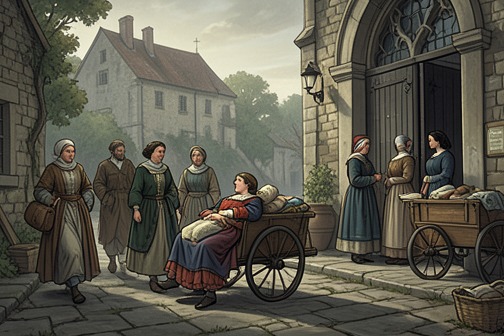
On a spring morning, Lizzy prepared to leave the convent with [Ben](entity:character-recall-character-ben-964df7d0a5ee), [Cleo](entity:character-recall-character-cleo-bbd2520849a1), and [Elena](entity:character-recall-character-elena-b3497658465a). [Abeyta](entity:character-recall-character-abeyta-38bb934823ca) and [Elinora](entity:character-recall-character-elinora-a3af6fd4c698) stood together to see her off, and Lizzy realized that [Santa Fe](entity:location-recall-location-santa-fe-ef80121842d3) had become a kind of home despite the grief and conflict she had endured there.
The journey to the [Santa Gertrudis Ranch](entity:location-recall-location-santa-gertrudis-ranc-12e2179e87a3) had been arranged, and [Mr. Enders](entity:character-recall-character-mr-enders-bf16447a2420) had a position and a home waiting for his daughter. Lizzy left with the belongings and relationships that had carried her through the winter, while promising to invite Elinora to visit in the future.
as Lizzy’s party leaves Santa Fe
Elinora’s Confession
As Lizzy rode away, [Elinora](entity:character-recall-character-elinora-a3af6fd4c698) whispered that she really had pricked [Cleo](entity:character-recall-character-cleo-bbd2520849a1)’s eyes, challenging the claim that the carpenter had healed the kitten. Lizzy remembered that Cleo had been blind and that she began seeing again after [José](entity:character-recall-character-jos-94f8299e2eea) held her.
Lizzy still could not prove that José was Saint Joseph, and she had never accepted the convent’s certainty about the staircase. Yet the cat’s recovery reopened a small possibility of belief, leaving Lizzy with a mystery she might never resolve and a new willingness to let wonder remain.